

-
ProductsHugong Valve is a well-known brand valve supplier that integrates research and development, manufacturing, sales, and service
-
ServiceProvide solutions within 4 hours, arrive at the scene within 24 hours, and provide regular and active on-site service
-
About UsHugong Valve is a well-known brand valve supplier that integrates research and development, manufacturing, sales, and service

-
BlogHugong Valve is a well-known brand valve supplier that integrates research and development, manufacturing, sales, and service
-
Language













News Center
Hugong Valve is a well-known brand valve supplier that integrates research and development, manufacturing, sales, and service
Globe Valves for Industrial Applications: Key Insights
Release time:
2026-05-27
Author:
Source:

Globe Valves for Industrial Applications: Key Insights
Introduction: The Importance of Globe Valves in Industry
Globe valves play a central role in modern industrial fluid control, providing precise flow regulation and reliable shutoff across many sectors. As process requirements demand finer modulation than simple on/off valves, globe valves and globe valve types become the default choice for applications requiring throttling, accurate pressure control, and repeatable performance. Selecting the right globe valve requires understanding operational parameters such as pressure drop, flow coefficient, and the compatibility of wetted materials with the medium. For many purchasers evaluating suppliers, credibility, testing, and the ability to provide customized solutions are equally important. Shandong Hugong Valve Manufacturing Co., Ltd. has positioned itself as a manufacturer able to supply an array of globe valves and related valves with OEM and custom options that meet these industrial needs.
Design Features of Globe Valves: Components and Comparison
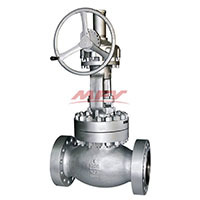
At the core of every globe valve is a simple but effective arrangement: the disc, seat, and stem combination that enables linear movement to modulate flow. The disc (or plug) moves perpendicular to the seat to vary the effective flow area, which produces a predictable relationship between stem travel and flow — a key reason operators choose globe valves for control loops. Globe valve types include angle-pattern, Y-pattern, and straight-through designs, each offering trade-offs in flow capacity and pressure drop; Y-pattern designs reduce flow resistance while straight-pattern valves provide compact installation. Compared to gate valves, globe valves sacrifice some Cv (flow capacity) but deliver far superior throttling and shutoff characteristics, making them preferable where precise control is required. Materials, bonnet style, packing and actuator compatibility further differentiate globe valves from other valve families and determine suitability in corrosive, high-temperature, or abrasive environments.
Performance Analysis: Evaluating Globe Valve Efficiency
Evaluating globe valve efficiency involves several metrics: flow coefficient (Cv), pressure recovery factor, leakage class, and actuator responsiveness under dynamic conditions. Cv indicates how much fluid a valve passes for a given stroke, and globe valves typically exhibit lower Cv values than gate valves of equivalent size due to their tortuous flow path. Pressure regulation with a globe valve is effective because the design dissipates energy progressively across the plug and seat, enabling stable pressure drop and avoiding sudden flow-induced instabilities. Shutoff performance is often measured against industry standards (e.g., API 598, ISO 5208), and many globe valves deliver tight shutoff classes suitable for critical services when properly designed and tested. For aggressive or high-cycle applications, attention to stem guidance, seat geometry, and erosion-resistant coatings will extend service life and improve overall efficiency.
Applications of Globe Valves in Various Industries
Globe valves are widely used across oil and gas, water treatment, chemical processing, power generation, and HVAC systems because of their precision control capabilities. In oil and gas, globe valve types are applied in choke, bypass, and sampling lines where controlled flow and reliable isolation are essential for safety and process stability. Water treatment plants use globe valves for dosing, filtration control, and backwash sequencing where precise modulation reduces operational costs. Chemical processing favors corrosion-resistant globe valves with specialized seat materials to handle aggressive media and maintain low leakage. Even where gate valve globe valve hybrids are specified for combined isolation and throttling duties, manufacturers can supply tailored designs to suit the exact process requirement.
Economic Considerations: Cost of Ownership of Globe Valves
Procurement cost is only one element of total cost of ownership for a globe valve; lifecycle expenses such as maintenance, downtime, spare parts, and energy losses because of pressure drop all influence long-term economics. Globe valves can require more robust actuators and suffer higher initial pressure losses, but their precise control reduces oversizing of downstream equipment, limiting wear and reducing overall operational cost in many control-critical systems. Maintenance programs that include periodic packing replacement, seat inspection, and actuator calibration extend component life and limit unplanned outages. When evaluating suppliers, buyers should compare not only unit price but also warranty coverage, availability of spares, and documented testing — factors that companies like Shandong Hugong Valve Manufacturing Co., Ltd. emphasize through quality assurance and accessible support channels.
Choosing the Right Globe Valve: Specification and Supplier Criteria
Selecting the best globe valve for a specific application follows a stepwise approach: define process conditions (temperature, pressure, media), calculate required Cv for desired flow range, determine material compatibility, and specify actuation type (manual, pneumatic, electric). Attention to details such as packing type, bonnet design for easy maintenance, and whether a y-pattern reduces wear can dramatically affect long-term performance. Supplier credibility matters: look for manufacturers with transparent test reports, compliance to standards, and the ability to deliver custom configurations such as special trims or unique flanged connections. For buyers comparing options like standard globe valves and specialized sdnr valve offerings or combined gate valve globe valve assemblies, ask for engineering data sheets and case studies relevant to your sector to validate supplier claims.
Shandong Hugong's Globe Valves: Tailored Solutions and Quality Assurance
Shandong Hugong Valve Manufacturing Co., Ltd. offers a broad portfolio covering multiple globe valve types, materials, and actuation options to meet diverse industrial demands. The company supports customization through dedicated engineering services, enabling tailored sdnr valve solutions, modified seat geometries, and material selections for corrosive or high-temperature service. Quality assurance at Hugong includes pressure testing, dimensional inspection, and performance verification to international standards; these tests are documented and can be provided to customers as part of the purchase package. Hugong also emphasizes after-sales support and technical guidance, helping buyers optimize valve selection and maintenance practices to reduce lifecycle costs and increase system reliability.
Implementation Guidance: Installation, Maintenance, and Troubleshooting
Proper installation and routine maintenance are critical to maximizing globe valve performance and longevity. Install globe valves in the correct orientation as specified by the manufacturer, ensure the flow direction aligns with design to avoid unnecessary seat wear, and select appropriate actuators sized for expected torque. Preventive maintenance should include periodic packing replacement, inspection of stem threads, and verification of actuator calibration to prevent leakage and sticking. Troubleshooting common issues—such as chatter, leak paths around the bonnet, or actuator malfunction—requires both process diagnostics and component inspection; manufacturers like Hugong supply support documentation and spares to expedite repairs. For complex or safety-critical systems, consider specifying redundant valves or automation that provides diagnostic feedback to plant control systems.
Competitive Advantages and Market Positioning of Hugong Valve
Hugong Valve differentiates itself through a combination of extensive product range, competitive manufacturing capability, and customer-focused services such as customization and technical support. By offering a wide selection from standard globe valves to specialized sdnr valve configurations and gate valve globe valve hybrids, the company meets varied market needs while maintaining quality through strict testing regimes. The manufacturer's catalog and product details can be reviewed on the Products page to compare options and request custom quotes, while company background and global presence are summarized on the Brand page. Hugong’s Support and Customized Service pages outline after-sales assistance and bespoke production capabilities, making it straightforward for engineering teams to integrate Hugong valves into their procurement plans.
Conclusion: Why Globe Valves Remain Essential in Industry
Globe valves continue to be indispensable in industries that demand controlled modulation, dependable shutoff, and predictable performance. Understanding globe valve types, matching valve characteristics to process requirements, and evaluating supplier capabilities are decisive steps toward reliable, cost-effective installations. Shandong Hugong Valve Manufacturing Co., Ltd. provides both standard and tailored globe valve solutions with documented testing and customer support, helping facilities minimize lifecycle costs while meeting stringent process specifications. For more detailed product listings and customization options, visit the Products page, and to explore company credentials or request technical assistance, see the Brand and Support pages linked above.
Key words:
Latest developments
Address:91, Zhongnan High-tech Yuandu Huizhi Industrial Park, Taixiang Street and Wenhua Road, Weifang Economic Development Zone, Shandong